Prototype on available compute

Early work may run on a developer workstation, notebook environment, rented GPU instance, or managed model API. The goal is learning, not perfect architecture.

  • Measure memory needs and response behavior.
  • Identify whether retrieval, tuning, or batch jobs are required.
Separate training from inference

Training clusters optimize throughput and large-scale data movement. Inference fleets optimize latency, uptime, routing, and cost per request.

  • Training may need fast interconnects and large storage pipelines.
  • Inference may need autoscaling, queues, caching, and fallbacks.

Package the runtime

Containers, base images, accelerator drivers, model-serving frameworks, and configuration management turn an experiment into a repeatable deployment.

  • Orchestration helps schedule workers and roll out updates.
  • Monitoring records latency, errors, saturation, and cost signals.

Choose cloud, bare metal, hybrid, or on-premise

Managed cloud can move quickly. Bare metal can make sense for steady demand. Hybrid and on-premise designs often appear when data location, cost control, or compliance becomes central.

  • Cloud: faster procurement, variable cost, managed integrations.
  • Bare metal or on-premise: more control, more operations burden.

Tune for the real constraint

Latency, throughput, cost, reliability, privacy, and energy use pull the architecture in different directions. A good server design names the constraint instead of optimizing everything vaguely.

B / Trade-offs

Server architecture is a set of tensions.

The fastest configuration is not always the most reliable, private, affordable, or energy-aware. Most AI deployments are a negotiated balance.

GPU Accelerators determine much of the model-serving envelope, but memory size and utilization matter as much as raw speed.
RAM Memory affects model loading, context size, batching, retrieval services, and the number of concurrent requests.
I/O Storage and network design shape training data flow, checkpoint movement, media pipelines, and distributed coordination.
Ops Monitoring, rollback, scheduling, patching, and incident response decide whether the system survives normal use.
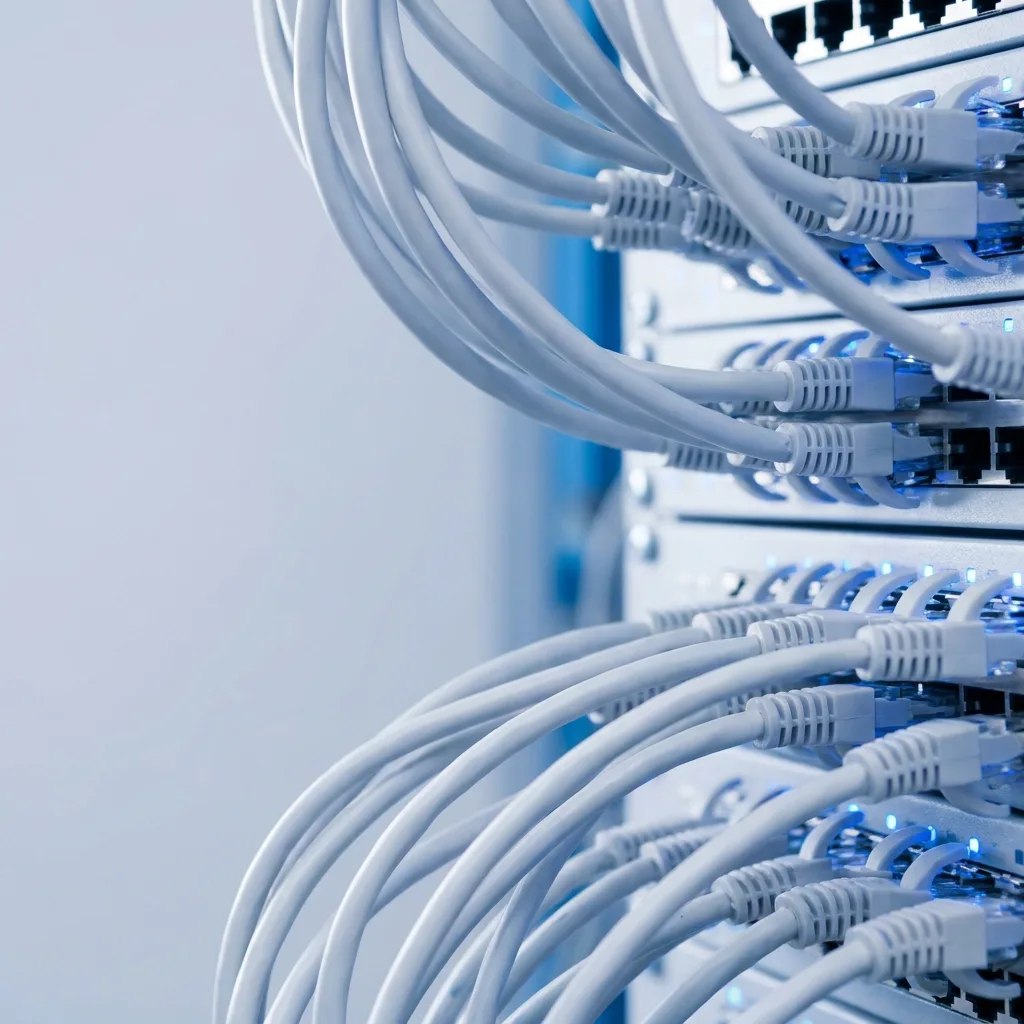
High-density network cables and server ports in a precise grid
Network and storage paths become visible when training jobs, retrieval systems, or media pipelines move large amounts of data.
Modern cloud data center with repeating server rows
Cloud, bare-metal, and hybrid infrastructure all need clear monitoring and capacity assumptions.
C / Review

Comparing deployment options?

Share the workload, expected traffic shape, privacy boundary, and budget pressure. We can outline which server and cloud questions deserve attention first.

Send a scenario